The Quiet Erosion
AI raises your confidence whether it's right or wrong. Two preprints from MIT and Wharton show it also degrades the skill you need to catch it when it fails. Aviation solved this problem decades ago. Medicine and software haven't.

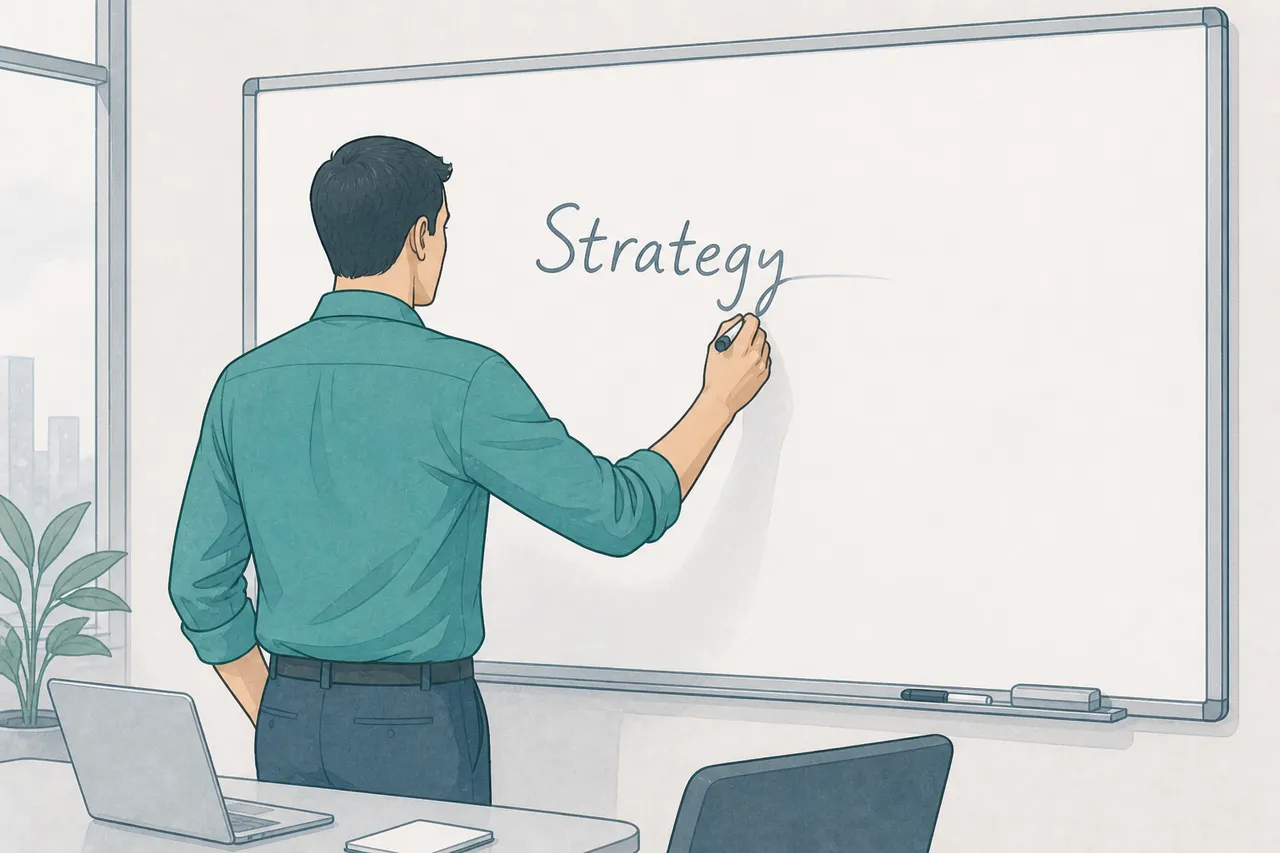
I have a specific fear I did not have ten years ago. It is not a big fear, but it is precise and repeatable. It happens when I am standing at a whiteboard in front of a room, marker in hand, and I need to write a word I use every day in every email and every document I produce. For a fraction of a second, I am not sure how to spell it.
Not a complex word. Not a word borrowed from another language. A word I have written thousands of times. But I have not actually written it, not physically, not without autocorrect watching. The keyboard corrects before I even register the error. The phone corrects before my finger lifts. Over years of this, the feedback loop that once connected my knowledge of the word to my hand simply atrophied. The motor memory is still there. The confidence is not.
This is a small thing. Nobody in the room notices. I spell the word correctly, or I choose a different one, and the meeting continues. But I notice, because I remember what it felt like to not have that hesitation.
That hesitation is the subject of this article.
We have been outsourcing cognitive work to tools for decades, and in each case the pattern is the same. The tool improves performance immediately. The underlying skill quietly degrades. And almost nobody notices until the tool is gone.
Eleanor Maguire's research on London taxi drivers established the baseline over twenty years ago. Taxi drivers who spent years navigating London without GPS developed measurably larger posterior hippocampi than matched controls. The brain grew in direct response to the navigational demand placed on it. Then Véronique Bohbot at McGill showed the reverse: habitual GPS users shifted from hippocampal spatial mapping to caudate-dependent turn-by-turn response learning. The hippocampus was not just underused; in habitual GPS users, it was effectively bypassed by a shift toward caudate-based turn-by-turn strategies. A 2017 fMRI study by Javadi and Spiers made the mechanism explicit: GPS use during navigation was associated with markedly reduced hippocampal engagement in real time, not later, during the act of following directions.
The brain responds to what it is asked to do, and it stops maintaining what it is not asked to do. This is not atrophy in the pathological sense. It is ordinary neuroplasticity operating exactly as designed, just in a direction we did not intend.
Spelling and handwriting are a more modest version of the same process. No hippocampal atrophy, no fMRI required. Just the quiet recession of a skill nobody measured until it was needed in public.
Two recent preprints from serious research groups suggest this pattern is now operating on something considerably more important than navigation or spelling.
The first is from MIT Media Lab. Kosmyna and colleagues recruited 54 participants and assigned them to three conditions: write essays using ChatGPT, write using a search engine, or write without tools. Across multiple sessions over four months, they measured brain engagement using EEG. The ChatGPT group showed progressively lower neural connectivity across sessions, with the weakest executive control, the lowest attentional engagement, and the least integration between brain regions. The search engine group showed engagement comparable to the no-tool group. Writing with AI was not equivalent to writing with search. It was categorically different: the cognitive work that normally happens during composition was not being redirected, it was being skipped.
In a fourth session, the groups were crossed over. ChatGPT users were asked to write without the tool. Their neural engagement did not recover to the level of the group that had been writing independently. Meanwhile, the independent writers given AI access for the first time used it effectively and showed high engagement. Prior independent skill was protective. Prior AI dependency was not self-correcting.
It is a small, pre-review study, but the design is rigorous and the direction of the effect is clear.
The second is from Wharton. Shaw and Nave ran three preregistered experiments with 1,372 participants on a modified Cognitive Reflection Test, the standard instrument for measuring whether people engage deliberate reasoning or accept the first answer that comes to mind. They introduced an AI assistant and, critically, varied whether the AI was correct or incorrect without telling participants which. What they found is what they call cognitive surrender.
When the AI was right, accuracy jumped 25 percentage points above the no-AI baseline. When the AI was wrong, accuracy fell 15 points below it. Participants who consulted the AI and received a wrong answer followed it on roughly four out of five trials. Access to AI also raised confidence by nearly 12 percentage points regardless of whether the AI was accurate.
Read that again. Confidence went up whether the AI was right or wrong.
The distinction Shaw and Nave draw is important. Cognitive offloading is strategic: you delegate a discrete task to a tool while retaining the judgment about when and how to use it. Cognitive surrender is something else: you stop constructing the answer entirely and adopt what the system produces. The judgment is not delegated. It is relinquished.
Again, preprint, not peer-reviewed. But three preregistered studies, 1,372 participants, and a specific quantified effect.
Neither of these findings would surprise anyone who has studied what happened to pilots.
Aviation discovered the deskilling problem decades before the word existed in AI discourse. The EASA 2021 Safety Issue Report on skills degradation documented what the industry had been quietly managing for years: pilots who spent long periods supervising reliable automation became measurably worse at manual flight when the automation failed. The knowledge did not disappear. The practiced, pressurized competence did. Air France Flight 447, where a stall was not identified and corrected during a three-and-a-half-minute window that should have been recoverable, is the canonical case, even though multiple factors were involved, of automation masking a situation where manual recognition and recovery should have been possible. Automation had been doing the work. The humans had been watching.
Aviation's response was structural. Mandatory recurrent proficiency checks, required no-automation flight hours, simulator scenarios specifically designed to degrade gracefully and force manual intervention. The countermeasure was not awareness. It was compulsory practice without the crutch.
Medicine has more recent data. A 2025 observational study published in Lancet Gastroenterology and Hepatology tracked experienced endoscopists before and after routine AI-assisted colonoscopy. Their adenoma detection rate without AI dropped from 28.4 percent to 22.4 percent after sustained AI exposure. A separate study published in PLOS ONE found that pathologists reversed correct initial diagnoses after seeing wrong AI suggestions at rates exceeding 30 percent in some conditions. The automation bias was not theoretical. It was measurable, acute, and stronger in less experienced readers.
The pattern across aviation, colonoscopy, and pathology is structurally identical to the MIT and Wharton findings. AI improves supervised performance. AI degrades independent performance. Confidence is not recalibrated downward when the tool is present. The human cannot tell from the inside that anything has changed.
The autocorrect example I started with is trivial. The word gets spelled. The meeting continues. The cost is a small private anxiety, not a clinical error or a downed aircraft.
But the mechanism is not trivial. It is the same mechanism, operating on a smaller scale and a less consequential skill. The feedback loop that maintained the skill was quietly removed, and the skill quietly receded, and nobody designed the countermeasure because nobody thought a spell-checker needed one.
Taken together, these findings strongly suggest that the same process is now at work in the cognitive domains we depend on most. Not handwriting. Not spelling. Reasoning, judgment, and the independent competence that makes it possible to catch the AI when it is wrong.
The Shaw and Nave moderator findings are worth sitting with. Higher trust in AI and lower need for cognition predicted greater cognitive surrender. Higher fluid intelligence and higher need for cognition were protective. The people most at risk are the ones most likely to believe they are not at risk.
This is not an argument against using AI. The +25 points when the AI is right are real, and anyone who ignores them is making a different kind of mistake. The question is whether you are preserving the independent competence that lets you recognize the -15 cases when they arrive. That competence is not maintained automatically. It is not preserved by awareness. It is preserved by practice without the tool, deliberately, regularly, in the same way aviation figured out that manual flying skill requires actually flying manually.
Most people using AI daily are not doing that. I am not always doing that. The whiteboard hesitation is a small signal, but it is a signal about direction. The direction is not reassuring.
This article is part of an ongoing series on healthcare AI, clinical workflow, and the systems that connect them.
Sources
- Maguire EA, Gadian DG, Johnsrude IS, et al. Navigation-related structural change in the hippocampi of taxi drivers. PNAS. 2000;97(8):4398–4403. https://doi.org/10.1073/pnas.070039597
- Maguire EA, Woollett K, Spiers HJ. London taxi drivers and bus drivers: a structural MRI and neuropsychological analysis. Hippocampus. 2006;16(12):1091–1101. https://doi.org/10.1002/hipo.20233
- Woollett K, Maguire EA. Acquiring "the Knowledge" of London's layout drives structural brain changes. Current Biology. 2011;21(24):2109–2114. https://doi.org/10.1016/j.cub.2011.11.018
- Dahmani L, Bohbot VD. Habitual use of GPS negatively impacts spatial memory during self-guided navigation. Scientific Reports. 2020;10:6310. https://doi.org/10.1038/s41598-020-62877-0
- Javadi AH, Emo B, Howard LR, et al. Hippocampal and prefrontal processing of network topology to simulate the future. Nature Communications. 2017;8:14652. https://doi.org/10.1038/ncomms14652
- Kosmyna N, Hauptmann A, Olwal A, et al. Your brain on ChatGPT: accumulation of cognitive debt when using an AI assistant for essay writing. arXiv preprint 2506.08872. 2025. https://arxiv.org/abs/2506.08872
- Shaw SD, Nave G. Thinking — fast, slow, and artificial: how AI is reshaping human reasoning and the rise of cognitive surrender. SSRN preprint 6097646. Wharton Behavioral Lab, 2026. https://ssrn.com/abstract=6097646
- EASA. Safety Issue Report: skills and knowledge degradation due to lack of recent practice. European Union Aviation Safety Agency, 2021.
- Endoscopist deskilling risk after exposure to artificial intelligence in colonoscopy. Lancet Gastroenterology and Hepatology. 2025. https://doi.org/10.1016/S2468-1253(25)00156-9
- Bellahsen-Harrar Y, et al. Exploring the risks of over-reliance on AI in diagnostic pathology. PLOS ONE. 2025. https://doi.org/10.1371/journal.pone.0323270


